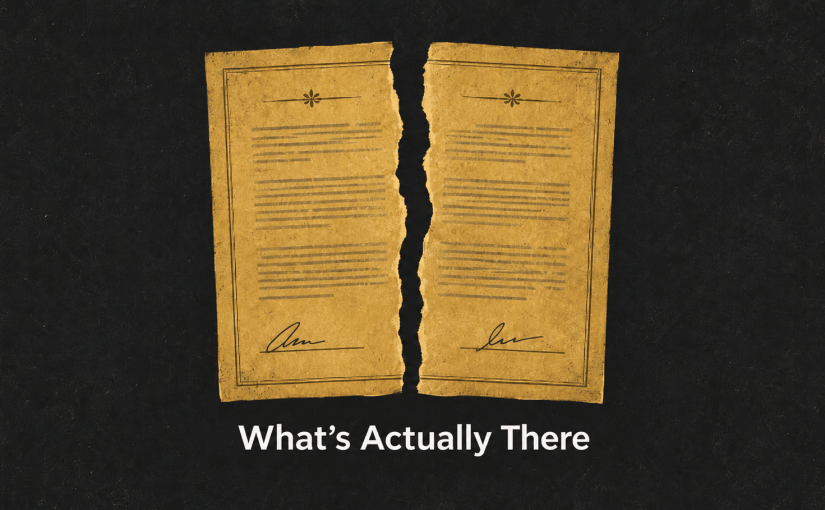
“It wasn’t meant to be. We were so different.”
That’s what a friend said to me at lunch the other day. She was talking about her marriage. She has been divorced for a few years, but she sometimes likes to go back in time and rethink what went wrong.
I’ve known my friend and her now ex-husband since they were dating. They always fought about even the smallest things. They thought it was passionate and raw, but as years ticked on it became exhausting and abusive.
This conversation got me thinking about Mergers and Acquisitions. I know, a weird train of thought, but stay with me on this one.
Last year I took a class on M&A. One of the main facts that the professor kept hammering in every class was that most M&A deals fail. Interesting point to bring up in a class teaching you how to structure and negotiate said deals.
In an M&A deal there are two parties: a buyer and a target. The buyer always pays more than the company is worth.
Why would anyone do that?
Because the buyer believes they can create more value with the target’s assets than the target is creating on its own. That belief is called synergies.
Maybe the combined company can negotiate better vendor deals because of its size, or eliminate redundant operations. The premium the buyer pays is a bet that those synergies will materialize.
Most of the time, they don’t. The belief that two things together will be greater than they were apart is a powerful one. It drives deals and relationships. And it is wrong more often than we like to admit.
The framework from The Innovator’s Dilemma by Clayton M. Christensen helped me understand why. According to the book, a company’s performance is based on three factors: resources, processes, and values.
An acquisition based on resources can be straightforward. You want a presence in the Southwest; you buy a company that’s already there.
But processes and values are more complicated.
The acquirer already has its own, and even if the target’s are superior, no one may understand how they came about or what invisible structures support them.
This is true of companies and of people.
You can buy a company, but you can’t buy its heart.
I once worked at a company well versed in M&A. For years, they would acquire smaller competitors, strip them for parts, keep their physical assets, client lists, and certain key employees, and get rid of the rest.
That plan worked for a while until they decided to acquire a massive competitor. After the deal, the company almost doubled.
I remember that everyone in the company received T-shirts that read: us vs them, with our logo and the target’s logo.
Someone pointed out that the “versus” made it seem more like a boxing match and less like a friendly merger.
Still, the CEO boasted that the new company would be so much greater because it would only include the best parts and processes of both companies.
I didn’t know that much about M&A at the time, but I remember questioning even then: how was he going to make sure that only the best parts stayed?
He didn’t. And he lost his job within two years of that deal.
Like with any human institution, the best is often supported by the less. You can’t have one without the other. Pick one and the whole structure unravels.
I’m not bullish on M&A. You would think that something with a failure rate of almost 90% wouldn’t be commonplace, but we confuse size and scale with success.
Still, some deals work. Some marriages work too. Not because the differences disappear, but because both sides stop trying to eliminate them.
My friend’s marriage didn’t fail because they were different. It failed because they spent years trying to fix each other instead of understanding each other. The CEO didn’t fail because the two companies were different. He failed because he thought he could keep the parts he liked and throw away the rest.
The mergers that work, at the conference table and at the dinner table, are the ones where both sides walk in knowing they are joining with something whole.
The 10% that survive, in business and in life, are the ones that fall in love with what’s actually there.

