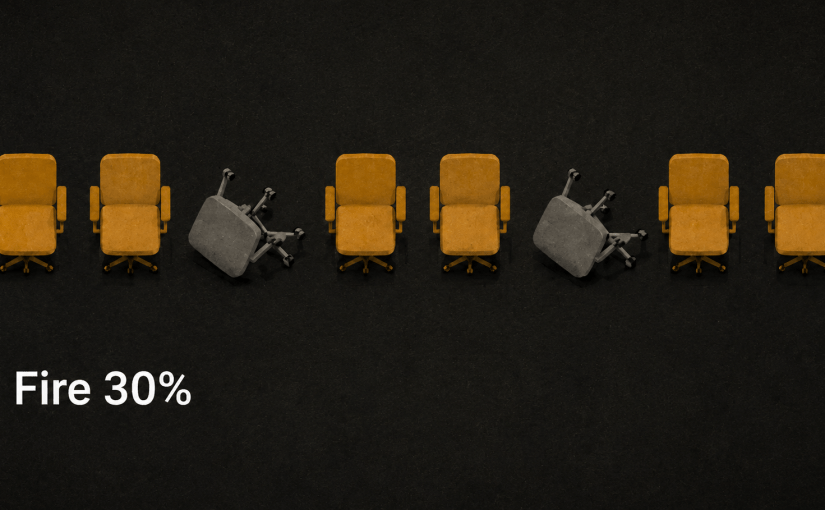
Graduation season. Commencement speakers across the country are talking about AI, and how it will change everything. Graduating classes are booing them. They just spent four years and a small fortune preparing for careers they’re now being told might not exist.
I won’t pretend to know what AI will or won’t do to the professional lives of new grads, but I do know what determines whether people make good career decisions or bad ones.
It is not just talent, or timing, or connections. It is whether they are acting from confidence or from fear. And that almost always comes down to money.
At some point, most people will be in a job they hate. And although you can always change jobs, the process can be lengthy and difficult. In the current environment, it might feel downright impossible.
You never want to stay at a job that is affecting your mental or physical health just because rent is due on the first. You don’t want to be pushed into actions that could hurt your professional reputation for years just because you don’t have a single month of savings.
When I talk about a safety net, I don’t mean millions or even hundreds of thousands of dollars. If you understand your numbers and know your burn rate, how much you absolutely need to survive for a period of time, you can act.
Early in my career, I found myself at a job that was toxic. I was not valued and had spent years waiting for a promotion that never came. Worse, the job had started making me question my own worth. A voice in my head started whispering that maybe I wasn’t good enough for that promotion.
I had to leave.
I started looking for another job, but I felt that the toxicity and the long hours were not letting me perform my best at interviews. I needed to leave and cleanse myself of that place. I would not advise this as a first choice, but it was how I felt at the time.
I looked at my numbers and decided that I needed $5,000. This was over 15 years ago. Things were cheaper, and I had a lot fewer bills to pay, but that and some part-time temp work should be enough to get me through six months.
From that point, my focus was on saving that $5,000. Once I had it in the bank, I quit. And things worked out. When I look back, I always see this as the real beginning of my accounting career. A small amount of money and confidence in my numbers made all the difference.
But it is not just about escaping from a bad situation.
A friend recently reached out to me, completely bummed out. A company had contacted him with his dream job. The job he wanted since he was a kid. He loved the company, the mission, the team. The role was a perfect next step and promised a lot of upside. But it came with a 30% pay cut. The company was a startup that couldn’t match his Fortune 10 salary. He was offered equity, but promises of future riches do not pay the bills today.
He looked at his budget and couldn’t figure out how to survive with 30% less. With a heavy heart, he turned it down.
I hope this experience makes my friend take a hard look at his numbers.
Most people don’t think about money as a career tool until the moment they need it to be one. A new job that requires a move. A new opportunity that requires a pay cut. The chance to pursue a dream. All of those require a reserve of money and the clarity to use it.
It all comes down to money. Having cash in the bank gives you freedom. And most importantly, it allows you to act from a place of confidence, not a place of fear.
Ironically, even if you decide to stay at your job, knowing that you could leave changes everything. You speak up more. You walk with more confidence. You hold your convictions more firmly. And that makes you a better leader and a better employee, the kind that good organizations notice and reward.
To new graduates, I still don’t know what AI will do to your careers. But I do know this: learn your numbers. Know what you need. Build a cushion. Everything else gets easier from there.