I opened it and my heart dropped.
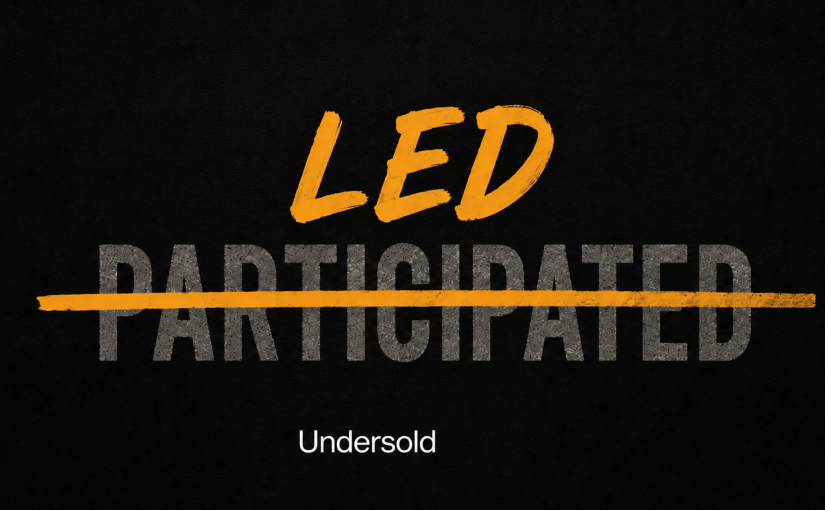
A former report reached out asking for help revamping his resume.I had worked with this guy. He is hardworking, smart, and dependable. Yet nothing on his resume showed that. His resume introduced someone who had “participated” and “supported” instead of “led” and “managed.”
I did a revision that more closely resembled the good work I saw him do. He found a great new opportunity shortly after.
I thought it was a one-off when just a few weeks later I got another call. This time from a former colleague. Her company had been acquired, and she was going to be out of a job by the end of the year. She had been looking but had not landed a single interview in months. I told her to send me the resume.
Same story.
I called her back immediately. I had been part of the team that hired her almost a decade ago. I asked her: how is it possible that your resume was better then, than it is now?
The resume is a tough document. In a world where so much of our identity is tied to our work, the resume becomes the record of our accomplishments. People want it to be faithful to their job descriptions, but they end up with a document that undersells their actual impact.
I offered to rewrite my colleague’s resume. I started with one question: what is your value proposition? What is the one thing you can do better than anyone else?
She was surprised by the question. She had not thought about it.
If you don’t know what you’re bringing to the table, you end up with a list of tasks that go from one to the next with no cohesive thread. A resume without a value proposition is an inventory not a story.
The core premise was not forthcoming, so I asked more questions. What projects did you oversee, and how did you contribute to their success? What are you proudest of from this experience? Did you make any changes that improved the processes, the company, or the team?
This is value creation. Most people have it. You just need to uncover it.
As important as what to include is what to exclude. Faulkner called it killing your darlings: removing the parts of the story that you love but that don’t serve the narrative.
My colleague had repetitive bullet points describing junior tasks that didn’t feed the pictureof an accounting professional with the power to automate manual systems and improve processes. She had done that work. It was real. But it was pulling the story in the wrong direction.
As we continued working, my colleague raised a concern that a lot of accountants share: how do you include numbers on a resume?
Salespeople have performance dashboards. They can say things like: increased revenue by $10M in my first year. Cost centers, accountants and other support roles usually have a hard time pointing to initiatives that made the company money. Success means getting the job done on time and as expected. Nothing flashy.
But you can add numbers in other ways. I asked my colleague to think about the number of accounts, countries, vendors, invoices, and entities she managed. These provide a sense of scope. Hours or days saved each month through process improvements, increases in accuracy, reductions in errors. These tell a story of continuing improvement.
After working on her story, I rewrote my colleague’s resume. She used it to apply for a few roles and started getting calls back almost immediately.
We spend so much time optimizing our resumes for the ATS (Applicant Tracking System) that we forget a human will eventually read it. Your resume still needs to tell a story that is compelling, specific, and that truly represents what you bring. The algorithm gets you through the door. The story is what makes someone want to meet you.
I think that sometimes a poor resume is connected to a poor sense of self. So when writing that record of your professional accomplishments, be kind to yourself. You are more qualified than you think. Your work matters. Let’s tell the story of why.