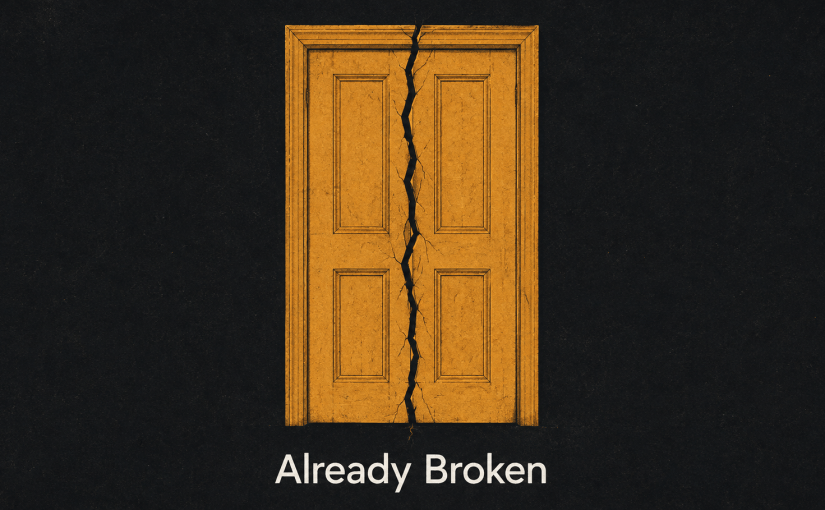
The hiring process is broken.
People can’t find jobs. Companies can’t find the talent they say they need. Jobs sites are full of open positions, yet no one is being hired.
Maybe it was always broken.
In What Color Is Your Parachute?, the author cites a Financial Times survey that found the hiring process was only 3% more effective at picking a good employee than random chance.
That stuck with me. Decades later, after going through hundreds of interviews and hiring dozens of people myself, I see what the problem is.
And it is everything.
Companies fail to figure out what they actually need before they start looking. They evaluate candidates against criteria that doesn’t exist, and then the role changes because it was never defined to begin with.
It all starts with the job description.
I’ve seen companies dust off an old job description even when they haven’t hired for the role in years and the role has changed materially in that time.
Recently, I interviewed at a company where it felt like they were workshopping the role as the interviews went along. I was sitting with the controller on a Zoom and asked how she envisioned this position interacting with the rest of the team. She responded that maybe they didn’t need this role after all. Maybe they were looking at things wrong. Maybe they needed to split the work along duties instead of business units.
While she was talking to herself, I was questioning why I was even in this meeting. They didn’t even know what they were interviewing for.
A week later, I got a polite email from HR closing the loop. Two days after that, I got a message from LinkedIn saying that I was a great fit for a new role at the same company.
The role wasn’t even that different. Same department, same level, a few key differences. Instead of going back to the candidates they already interviewed and asking if they would be interested in a slightly different role, they cleared the slate and started a new search.
I’m surprised that a company that seems so far behind has the time to have their employees interview candidates over and over as they figure out what they need.
A friend was telling me about a failed hire by one of his clients. The client was looking to fill a Senior Accountant role, a highly independent position. She hired a young guy who had graduated two years prior. He had gone to a great school and passed the CPA exams.
He turned out to be a terrible hire, and the company let him go before his 90-day trial period ended.
My friend was wondering what went wrong. I told him the answer was there all along. His client needed an individual contributor who could function with drive and independence. Instead, she hired a junior accountant with two years of experience in a large, highly automated company that was probably still figuring things out.
The problem was not the candidate. It was the candidate-role relationship.
Then there is the fact that the role you hire someone for often changes, sometimes shortly after the candidate starts. A candidate who could have been great at the original role might struggle with the new expectations.
I once started a job where I was told the company was “a mess” and that the team needed a lot of help. I debated whether to walk away, but I was offered a lot of autonomy and independence on how to deal with the issues. I decided to accept.
Five months passed between my first interview and my first day. That alone said a lot about the “mess.”
On my second day, the controller set up a meeting with me. I thought it was a simple welcome to the team. It wasn’t.
She told me that since we had last spoken, months prior, she had gotten approval for another hire at my level. She had just started the search but didn’t want to assign me a specific role until “all the pieces were on the board.” She asked for my patience and told me to observe and help around until my colleague was hired.
I declined politely. I told her that if there wasn’t a clear role for me, I was happy to leave. I had left a position where I was leading a team to take a role where I was going to lead a larger team, not to sit around and help like a junior staff member. If they couldn’t provide what was promised, I would leave and look for a better opportunity.
The controller quickly changed her tune and gave me a team and a somewhat defined role.
What would have happened if I had agreed to just wait?
Colleagues would have started wondering what I did. Questions about my competence would have surfaced. And I would have probably been quietly escorted out of the company while the controller wondered why this hire didn’t work out.
Roles are not well defined. Every member of the hiring committee is looking for something different. After the candidate is hired, the role morphs into something unrecognizable. And then we wonder what went wrong.
Slow, invisible systemic failures that are ultimately blamed on the hire who doesn’t stay, and that hurt the team left behind, understaffed, and starting the same failed process all over again.
Behind every resume is a person. Someone who prepared for the job interview, showed up, and trusted that the company knew what it was looking for. It would be nice if the process remembered that.

