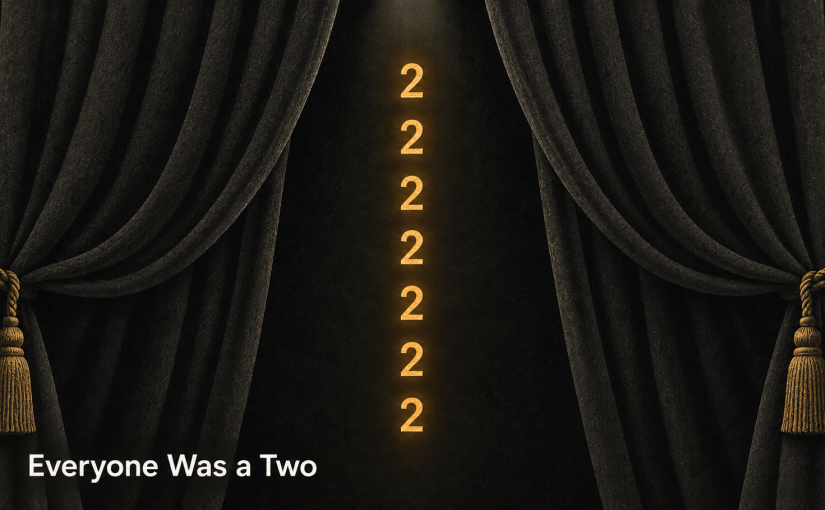
“I guess I am a two.”
That’s the comment from a friend I met for lunch recently. She was not talking about her looks. She was talking about her corporate review ranking.
My friend works at a large publicly traded company that didn’t have a review process. The company decided to finally set up one, and no one is happy about it.
The company developed a one-to-five ranking. From Outstanding at five to Unsatisfactory at one. Pretty standard. Each level has ten points that have to be met in order to receive that rating. Miss one of the ten and you are immediately downgraded to the level below.
My friend has worked at this company for almost a decade, was surprised by the two. She had received nothing but good feedback during her tenure, was promoted, and moved around teams as they needed her help. “Needs Improvement” was not what she expected.
Since this was the first time using the review process, the company started with a mid-year preliminary review, giving people the chance to “improve” their rankings by the final year-end review.
The consequences for anyone who failed to improve were unclear yet seemingly sinister.
My friend was left with little advice on how to improve besides: bring those numbers up by year end. Good luck.
Management seemed as clueless as everyone else. My friend’s manager started their conversation by admitting she had received little training on the process herself and couldn’t answer even basic questions.
My friend left the meeting feeling like it was just her. She had done something wrong and was being singled out for punishment.
Until she started talking to other colleagues.
It turned out everyone was a two, and no one was clear as to why.
How to not be a two was another unanswered question. Everyone was unhappy and on edge, assuming this was a way for the company to perform a stealth layoff by the end of the year.
I’ve learned over time that for feedback to be useful it needs to be timely, simple, and low stakes.
My friend got years of positive feedback followed by a two with no warning. That’s not timely. She was told to bring her numbers up without being told how. That’s not simple. And her job may depend on improving a score she doesn’t understand. That’s not low stakes.
All of this is the opposite of good feedback.
My friend’s company at least tried to build a review process, even if they failed. Some companies don’t even bother.
I once started a job where I was in my third month when layoffs happened. Two people from my department were let go. Me and this other guy who was hired a few days after me shared a look that said: did we join a sinking ship?
That afternoon, the Director of Accounting called us to her office to settle our minds. These layoffs were the way the company “cleansed” itself of underperformers. Instead of PIPs (Performance Improvement Plans) and write-ups, management just kept a list of people they wanted to let go. Once a year, these employees were included in the annual seasonal layoff.
According to the Director, me and the other new hire were safe since we were doing such good work.
“Until next year’s layoffs,” I said. The Director laughed and called me funny.
I was not joking.
How is never telling someone what they are doing wrong and never giving them the opportunity to improve the way to go?
I’ve also worked at companies, big companies, where the annual review was just a box everyone checked. Not an actual conversation between manager and report about career direction and performance. Just a form to fill out and a meeting to get through.
And even when companies take the process seriously, there is rarely a connection between your review and your reward. As someone who works in accounting, I know that by the time review season comes, next year’s budget has already been approved and locked.
Reminding your manager of that great project you did at the end of the year is not changing your bonus or your compensation at this point.
The review process was supposed to be a contract. The company provided feedback on your work. Your effort was recognized. Both sides of that contract are broken. And yet we all go through the motions because the calendar says it’s time.
Companies, if you’re not willing to do reviews right, don’t do them at all. Let people keep doing their jobs in peace. And save the performances for the theatre folks.

